
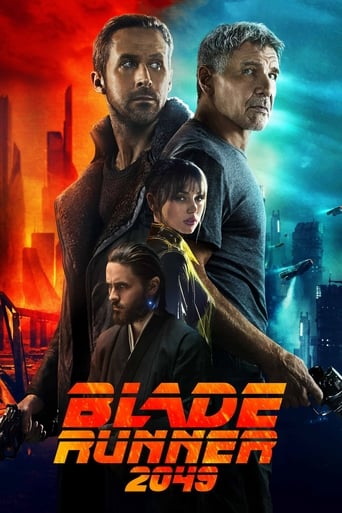
Movies Like Blade Runner 2049
Thirty years after the events of the first film, a new blade runner, LAPD Officer K, unearths a long-buried secret that has the potential to plunge what's left of society into chaos. K's discovery leads him on a quest to find Rick Deckard, a former LAPD blade runner who has been missing for 30 years.
Ranked by shared directors, cast, themes, genre, and era — not just generic recommendations.
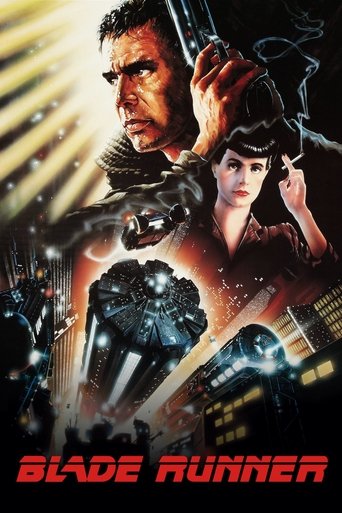
Blade Runner
Direct franchise predecessor; same world, replicants, blade runners, and tech noir existential dread
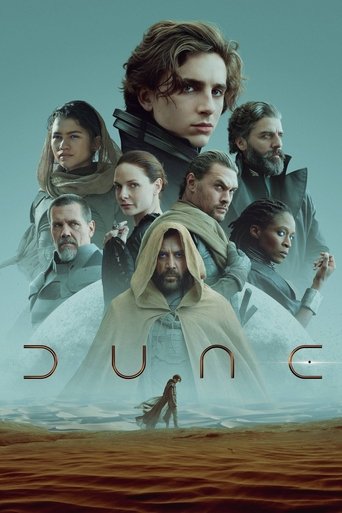
Dune
Same director (Villeneuve); visually stunning slow-burn sci-fi epic with philosophical weight and Deakins-level cinematography

Ex Machina
Intimate AI consciousness thriller; questions what makes someone human, same cerebral adult tone and dread

Her
Near-future LA, AI identity and love, melancholic slow-burn; thematically mirrors K's longing for humanity
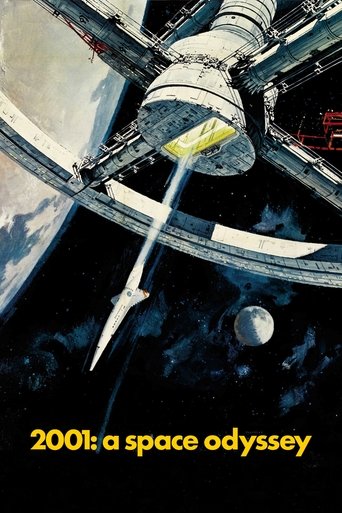
2001: A Space Odyssey
Landmark slow-burn sci-fi asking what consciousness means; AI vs humanity, austere visuals, zero hand-holding

Arrival
Denis Villeneuve; cerebral, emotionally devastating sci-fi about perception, memory, and what it means to be human
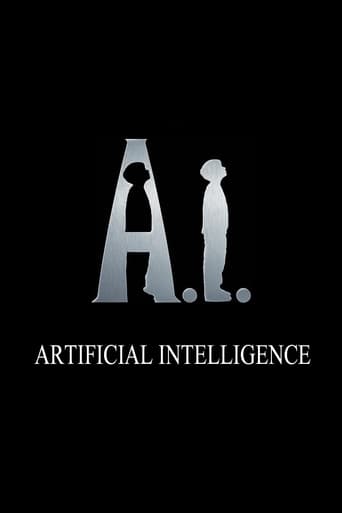
A.I. Artificial Intelligence
Android yearning to be real in a dystopian future; melancholy, visually rich, same existential ache as BR2049
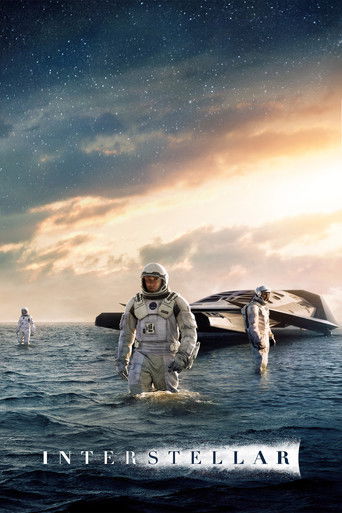
Interstellar
Epic slow-burn sci-fi with grand visuals, emotional core, and heady questions about existence and identity

Ghost in the Shell
Definitive cyberpunk anime on android identity and soul; direct spiritual ancestor of Blade Runner's core questions
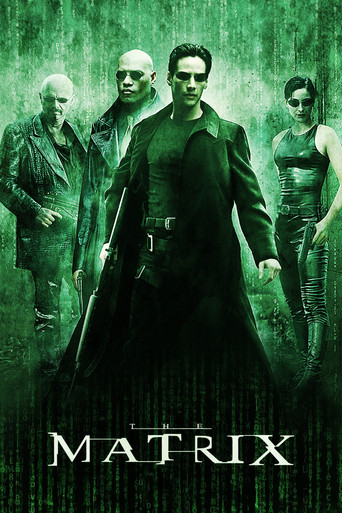
The Matrix
Dystopian cyberpunk classic questioning simulated reality and human identity; same philosophical DNA
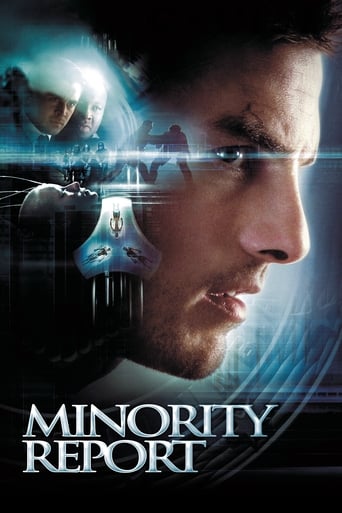
Minority Report
Tech noir cyberpunk thriller with a lone investigator in a grim near-future; similar pacing and moral ambiguity
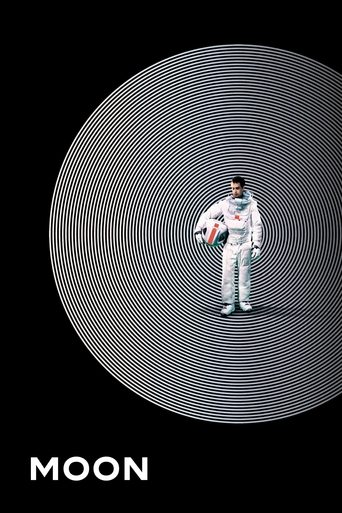
Moon
Isolated protagonist discovers disturbing truth about his identity; slow-burn, cerebral, emotionally resonant sci-fi
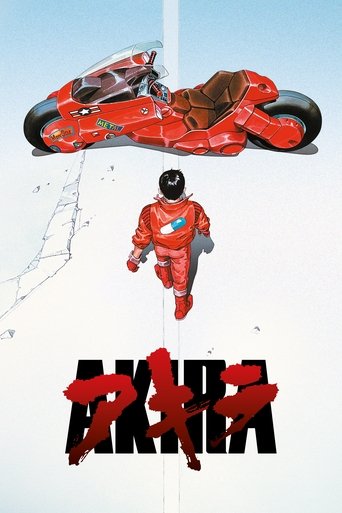
Akira
Foundational cyberpunk dystopia; dark megacity, government experiments, identity collapse — shares BR2049's aesthetic DNA
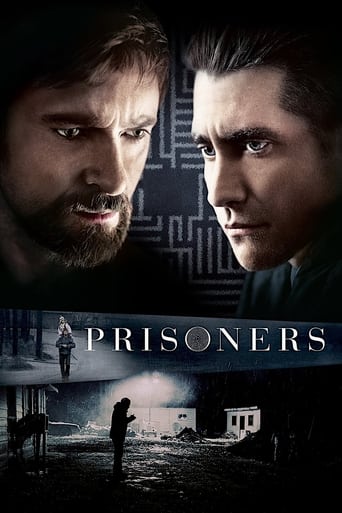
Prisoners
Villeneuve + Roger Deakins; bleak moral thriller with the same oppressive dread and visual precision

Sicario
Villeneuve + Deakins; slow-burn procedural drenched in moral ambiguity and existential hopelessness
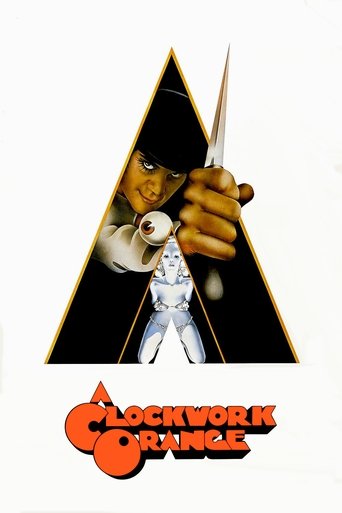
A Clockwork Orange
Dystopian near-future, questions of free will and identity, auteur visual style; thematically adjacent adult sci-fi
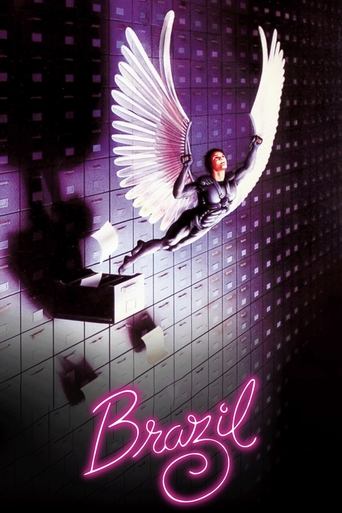
Brazil
Dystopian bureaucratic nightmare with dreamlike visuals; same bleak world-weariness and oppressive atmosphere
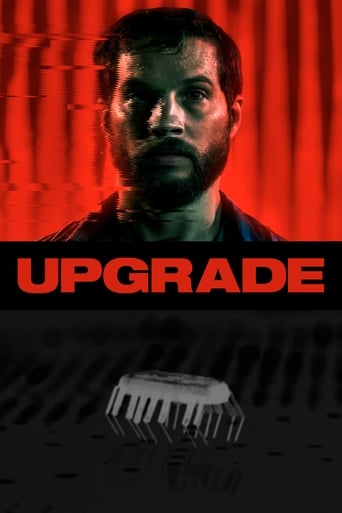
Upgrade
Cyberpunk near-future, AI body implant and loss of agency; leaner and more action-focused but shares the world

Never Let Me Go
Quiet, devastating meditation on clones who accept their fate; same melancholy about manufactured lives and mortality

Wings of Desire
Lyrical, slow-burn existential drama about longing to be human; tonal and thematic cousin to K's arc
How Good Is Blade Runner 2049?
Ratings across IMDb, Rotten Tomatoes, Metacritic, and TMDB, plus our verdict.
Where to Watch Blade Runner 2049
Streaming, rental, and purchase options across 40+ countries.
United States
USStream
5 fuboTV
 Paramount Plus Premium
 Paramount Plus Essential
 Paramount+ Amazon Channel
 Paramount+ Roku Premium Channel
Rent
4 Spectrum On Demand
 Amazon Video
 Apple TV Store
 Fandango At Home
Buy
7 Barnes & Noble
 Amazon DVD / Blu-rayAmazon Video
 GRUVApple TV StoreFandango At Home
 Zavvi
ZavviAvailable in 112 countries
Frequently asked about Blade Runner 2049
Common questions people search for, with answers written by us at MoviesPack.
Why did Blade Runner 2049 flopped?
Blade Runner 2049 underperformed at the box office, earning around $267 million worldwide against a production budget of roughly $150-185 million plus heavy marketing costs. Its 164-minute runtime limited daily showings, and the original Blade Runner's cult-but-niche status meant the sequel lacked broad mainstream awareness despite strong reviews.
Is Blade Runner 2049 considered a good movie?
Yes, Blade Runner 2049 is widely considered a good movie, holding an 88% critics score on Rotten Tomatoes and an 8.0 rating on IMDb. It won two Academy Awards, for Best Cinematography (Roger Deakins) and Best Visual Effects, and is frequently cited as one of the best science fiction sequels ever made.
What is the most famous line from Blade Runner?
The most famous line from Blade Runner is Roy Batty's "Tears in Rain" monologue, which ends with "All those moments will be lost in time, like tears in rain." It is from the original 1982 Blade Runner, delivered by Rutger Hauer, and was largely improvised by the actor.
Is K (Officer KD6-3.7) actually the child of Deckard and Rachael?
No. K initially believes he may be the miracle child because his implanted memory — a wooden horse hidden in a furnace — turns out to be real rather than fabricated. However, the film reveals that the real child is Ana Stelline, the replicant memory designer who crafted that very memory. K's memory felt authentic because Ana shared it with him; he was never the child himself.
Why does Niander Wallace want to find Rachael's child so badly?
Wallace has mastered replicant manufacturing but cannot produce them fast enough to colonize off-world planets at the scale he desires. A replicant capable of natural reproduction would eliminate the biological bottleneck entirely, letting him breed an unlimited slave workforce. Control over that genetic secret would give Wallace absolute dominion over human expansion across the galaxy.
What is the significance of K's wooden horse memory?
The carved wooden horse is the pivotal object K uses to test whether his memory is a standard implant or a genuine lived experience. He finds the horse hidden exactly where the memory shows it — suggesting the memory is real. The twist is that the memory belongs to Ana Stelline, who encoded it from her own childhood; K experienced it as his own because replicant memories are indistinguishable from real ones when implanted.
What does the ending mean — why does K bring Deckard to Ana instead of to Wallace?
K chooses to defy his programming and the Replicant Freedom Movement's orders at the end, acting on purely personal compassion. Rather than deliver Deckard to either Wallace (who wants to use him as leverage) or the resistance (who would exploit the reunion for propaganda), K arranges a quiet, private meeting between a father and the daughter he never knew. It is K's first fully autonomous moral choice and serves as the film's argument that genuine humanity is defined by selfless action rather than biological origin.
Is Deckard a replicant in Blade Runner 2049?
The film deliberately leaves this unresolved, continuing the ambiguity of the original. Wallace explicitly taunts Deckard by suggesting he was engineered to meet Rachael and father a child — implying he may have been a purpose-built replicant. However, no definitive confirmation is given, and Deckard himself does not know the answer. Director Denis Villeneuve has stated he intentionally preserved the mystery rather than settling the debate.
Recent Updates
New Teaser: Blade Runner 2049
New Trailer: Blade Runner 2049
Blade Runner 2049 now streaming on Sooner (FR)
Blade Runner 2049 now streaming on Pathé Home (FR)
Blade Runner 2049 now streaming on Premiere Max (FR)