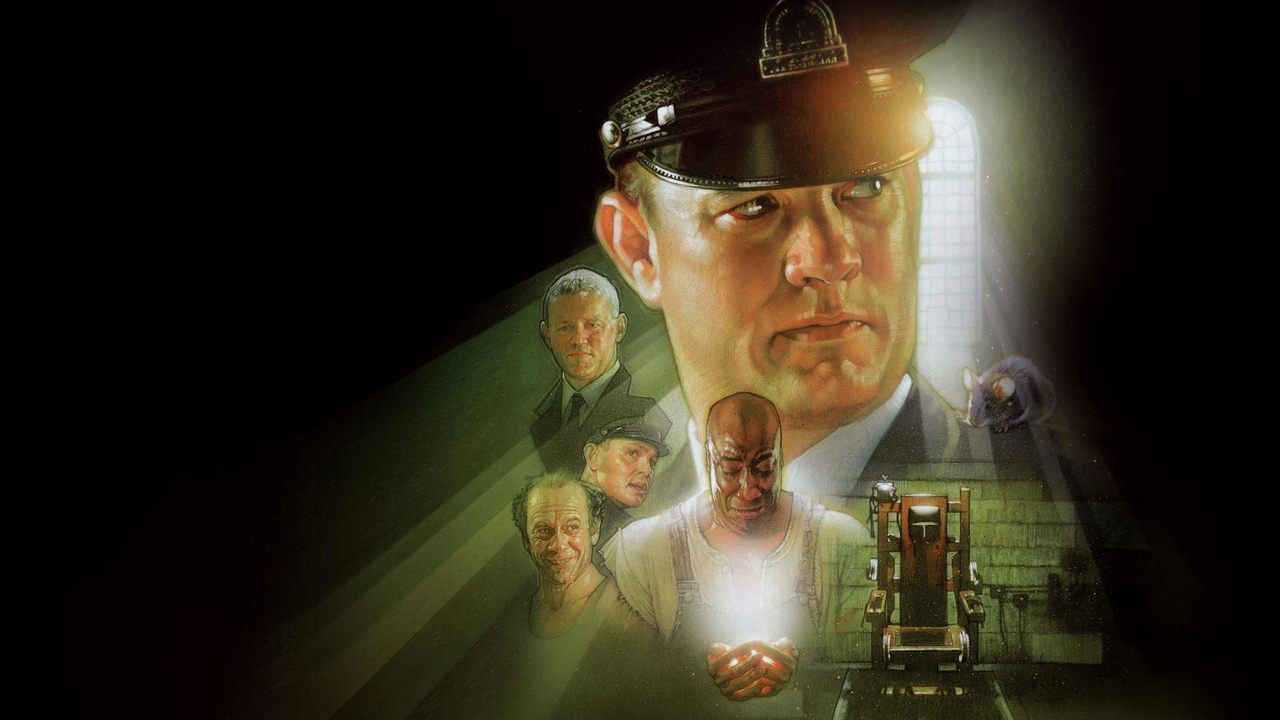
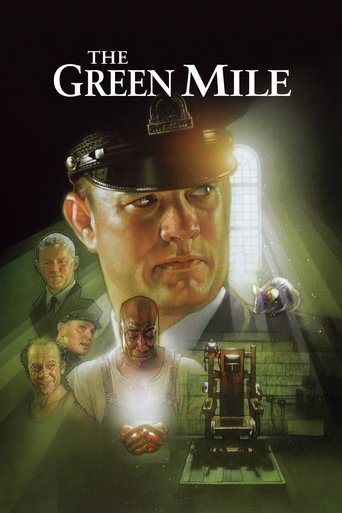
Movies Like The Green Mile
A supernatural tale set on death row in a Southern prison, where gentle giant John Coffey possesses the mysterious power to heal people's ailments. When the cell block's head guard, Paul Edgecomb, recognizes Coffey's miraculous gift, he tries desperately to help stave off the condemned man's execution.
Ranked by shared directors, cast, themes, genre, and era — not just generic recommendations.
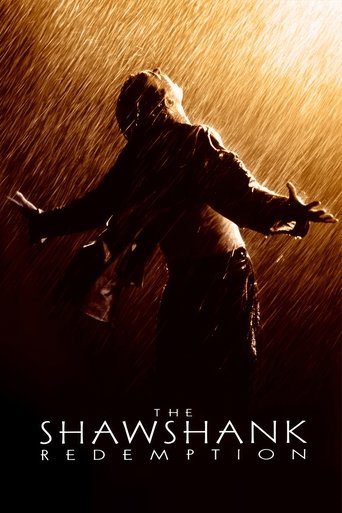
The Shawshank Redemption
Same director (Frank Darabont), same author (Stephen King), prison drama with redemption and supernatural overtones
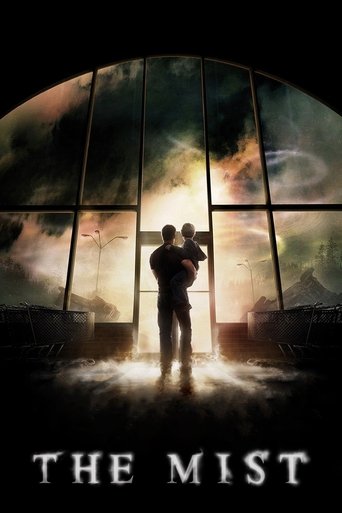
The Mist
Frank Darabont directs another King adaptation — supernatural horror with moral weight and a devastating ending
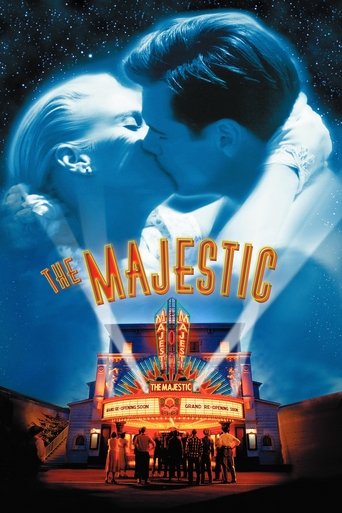
The Majestic
Frank Darabont director; period drama about innocence and justice, though lighter in tone than The Green Mile
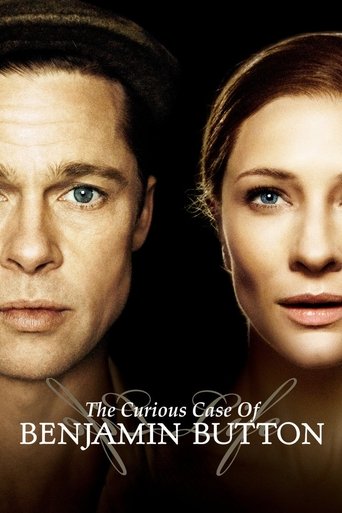
The Curious Case of Benjamin Button
Magic realism, Great Depression era, deeply emotional adult drama about mortality and the passage of time
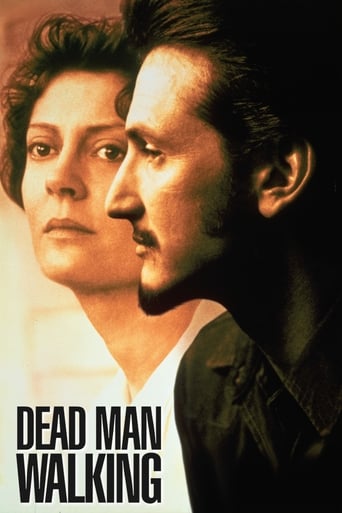
Dead Man Walking
Death row drama with deep humanity, spiritual themes, and moral complexity around capital punishment
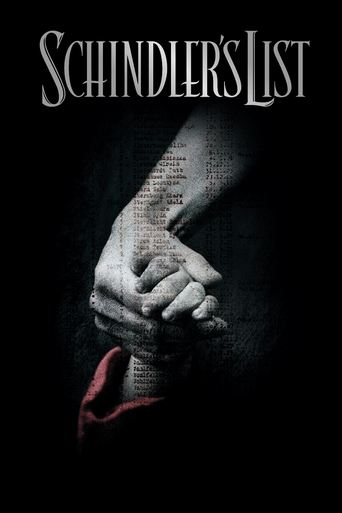
Schindler's List
Profound adult drama about injustice, grace under cruelty, and one man's moral transformation — same emotional gravity
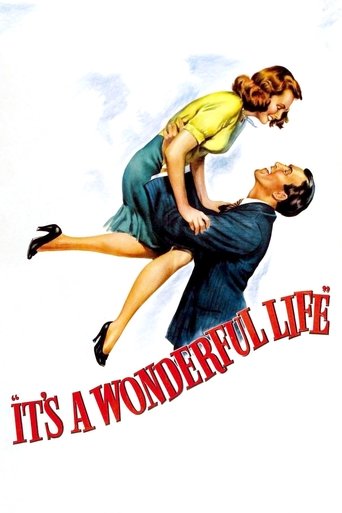
It's a Wonderful Life
Magic realism, supernatural intervention, Great Depression era, emotional drama about human worth and grace
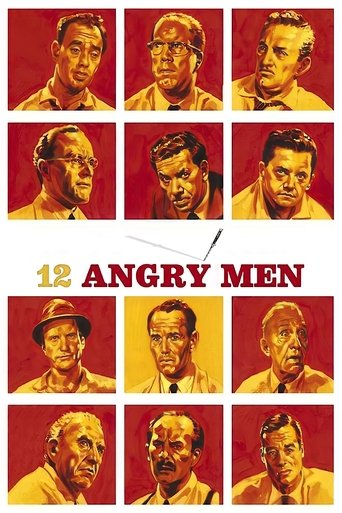
12 Angry Men
Death penalty, wrongful conviction themes, serious adult drama — thematically aligned though no supernatural element
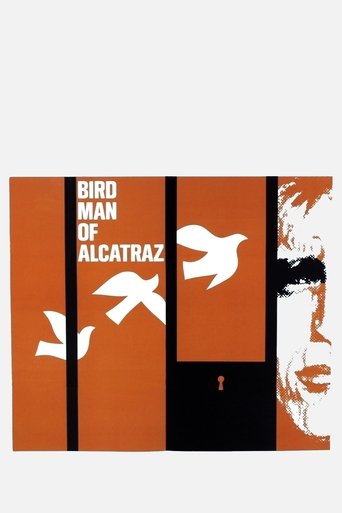
Birdman of Alcatraz
Prison drama about a condemned man finding redemptive purpose in solitary; similar tone of dignity within incarceration

Bronson
Prison drama, long-term solitary confinement, character study of a man the system cannot contain
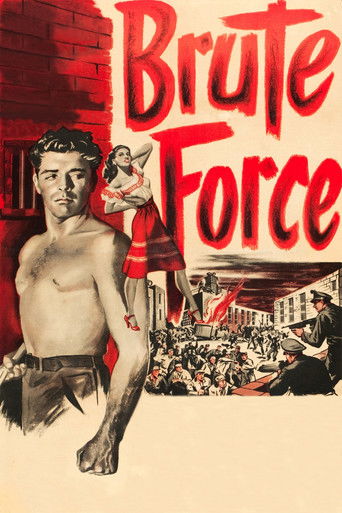
Brute Force
Prison drama with sadistic guard abusing power, noir tone, desperation of inmates — shares core setting and tension
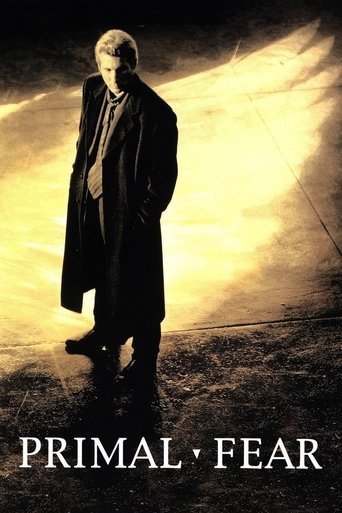
Primal Fear
Death penalty, psychopath, adult crime drama with a major twist — shares capital punishment stakes and courtroom gravity
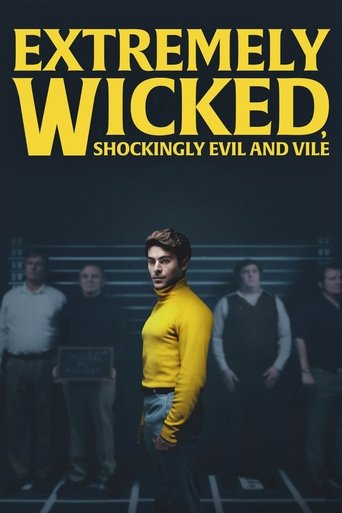
Extremely Wicked, Shockingly Evil and Vile
Death row drama, prison setting, exploration of a condemned man's humanity from an outside perspective
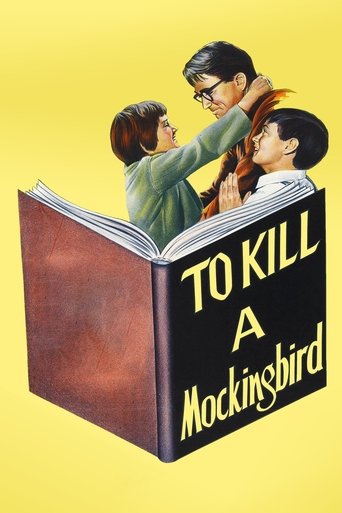
To Kill a Mockingbird
Southern USA setting, racial injustice, moral courage — shares The Green Mile's emotional and thematic DNA
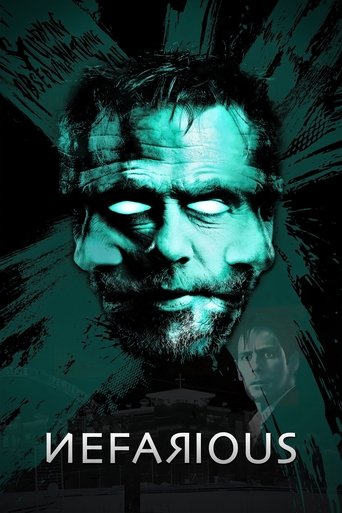
Nefarious
Death row + prison guard setting, supernatural possession angle — overlapping setup but horror/evangelical tone diverges
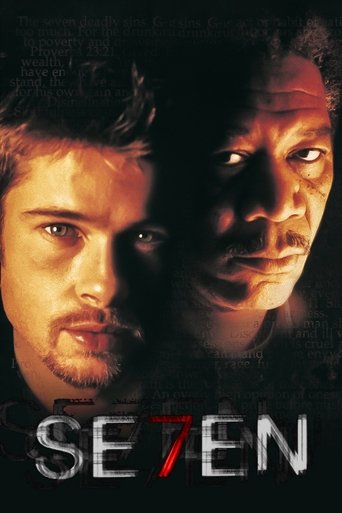
Se7en
Dark adult crime drama, Morgan Freeman, themes of evil and judgment — tonal kinship despite being pure thriller
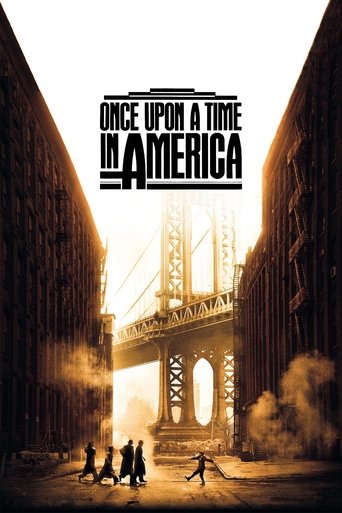
Once Upon a Time in America
Epic 1930s adult drama, weighty moral themes, tragedy and regret — shares era and gravitas, different genre
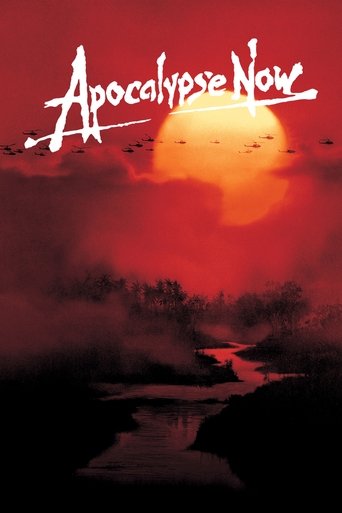
Apocalypse Now
Literary adult epic exploring the nature of evil and human capacity for cruelty — thematic cousin, different setting

The Bridge on the River Kwai
Prisoner/captor drama, dignity under oppression, moral complexity — shares weighty adult drama tone
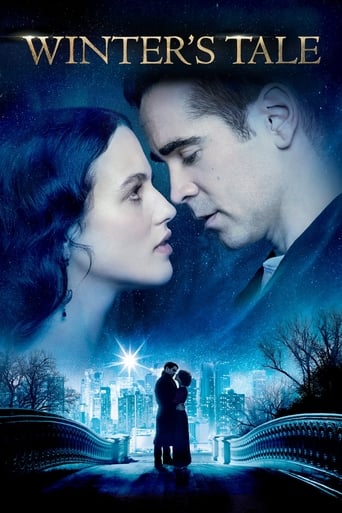
Winter's Tale
Supernatural fantasy drama with healing and love, but weak execution and tone drifts far from Green Mile's gravitas
How Good Is The Green Mile?
Ratings across IMDb, Rotten Tomatoes, Metacritic, and TMDB, plus our verdict.
Where to Watch The Green Mile
Streaming, rental, and purchase options across 40+ countries.
United States
USRent
4 Spectrum On Demand
 Amazon Video
 Apple TV Store
 Fandango At Home
Buy
5 Barnes & NobleAmazon VideoApple TV StoreFandango At Home
 Amazon DVD / Blu-ray
Available in 88 countries
Frequently asked about The Green Mile
Common questions people search for, with answers written by us at MoviesPack.
Is the Green Mile film a true story?
No, The Green Mile is not a true story. It is a fictional supernatural drama adapted from Stephen King's 1996 serial novel of the same name.
What was Tom Hanks' illness in The Green Mile?
Tom Hanks' character, Paul Edgecomb, suffers from a severe urinary tract infection caused by an inflamed bladder. John Coffey miraculously cures it by laying his hands on Paul and drawing the infection out.
What is the famous line from The Green Mile?
The most famous line is John Coffey's repeated phrase, "I'm tired, boss," delivered before his execution. He also memorably explains his name as "Coffey, like the drink, only not spelled the same."
What is the point of the movie The Green Mile?
The film explores themes of compassion, injustice, and the moral weight of capital punishment, using John Coffey's gift and wrongful conviction to question how society treats the innocent and the vulnerable. It also examines the burden of witnessing miracles and cruelty, leaving Paul cursed with unnaturally long life as punishment for executing a gift from God.
What is John Coffey's supernatural ability and how does it work?
John Coffey can heal illness and injury by absorbing the affliction into his own body through touch, then expelling it as a swarm of dark, insect-like particles he exhales into the air. He uses this power to cure Paul Edgecomb's painful urinary infection, revive the mouse Mr. Jingles after Percy stomps it, and heal the warden's wife of her brain tumor. The ability appears instinctive rather than fully controlled — Coffey himself describes it simply as 'taking it back' when explaining how he restored Mr. Jingles.
Did John Coffey actually murder the two girls he was convicted of killing?
No — the film makes clear Coffey was innocent. He was found holding the girls because he was attempting to heal them after the real killer, fellow death-row inmate Wild Bill Wharton, had already murdered them. Coffey absorbs the girls' final moments and transmits a vision to Paul through touch, allowing Paul to witness that Wharton was the true perpetrator. Coffey's conviction is presented as a product of racial injustice in the Depression-era South, where a large Black man found with two dead white girls had no realistic chance of a fair trial.
Why does John Coffey allow himself to be executed when he is innocent and supernaturally powerful?
Coffey tells Paul he is exhausted by the constant pain he feels from absorbing the world's cruelty and suffering, which he experiences as 'pieces of glass' grinding in his head every waking moment. He also confesses he is afraid of the dark, suggesting death offers relief rather than dread. His willing acceptance of execution carries deliberate Christ-like symbolism throughout the film — his initials are J.C., he heals the sick and takes on others' suffering, and he is executed as an innocent man condemned by those he never harmed.
What happens to Paul Edgecomb after Coffey heals him, and why does Paul consider it a curse?
When Coffey heals Paul's severe urinary tract infection, he inadvertently transfers a portion of his own supernatural life force into Paul, dramatically extending Paul's lifespan. By the framing narrative set in 1999, Paul is well over 100 years old yet still alive and lucid, having outlived his wife, his colleagues, and everyone he ever loved. Paul views this extraordinary longevity not as a blessing but as an ongoing punishment — a quiet penance for his role in executing an innocent man, forcing him to endure loss indefinitely.
What is the symbolic role of Mr. Jingles the mouse, and why does Percy target him?
Mr. Jingles, the mouse that inmate Eduard Delacroix tames on death row, functions as a symbol of innocence and the capacity for tenderness even in the bleakest circumstances. Percy Wetmore targets the mouse out of spite and a need to assert dominance — he is threatened by the genuine warmth the guards and inmates share, and crushing Mr. Jingles is a way to inflict cruelty where he can get away with it. Coffey's resurrection of the mouse after Percy stamps on it reinforces the scope of his healing power, and at the film's end the elderly Mr. Jingles is still alive alongside Paul — another unintended recipient of Coffey's extended life.
Recent Updates
New Trailer: The Green Mile
The Green Mile now streaming on Rakuten TV (FR)
The Green Mile now streaming on Sooner (FR)
The Green Mile now streaming on ARTE Boutique (FR)
The Green Mile now streaming on Pathé Home (FR)