Movies Like Bowling for Columbine
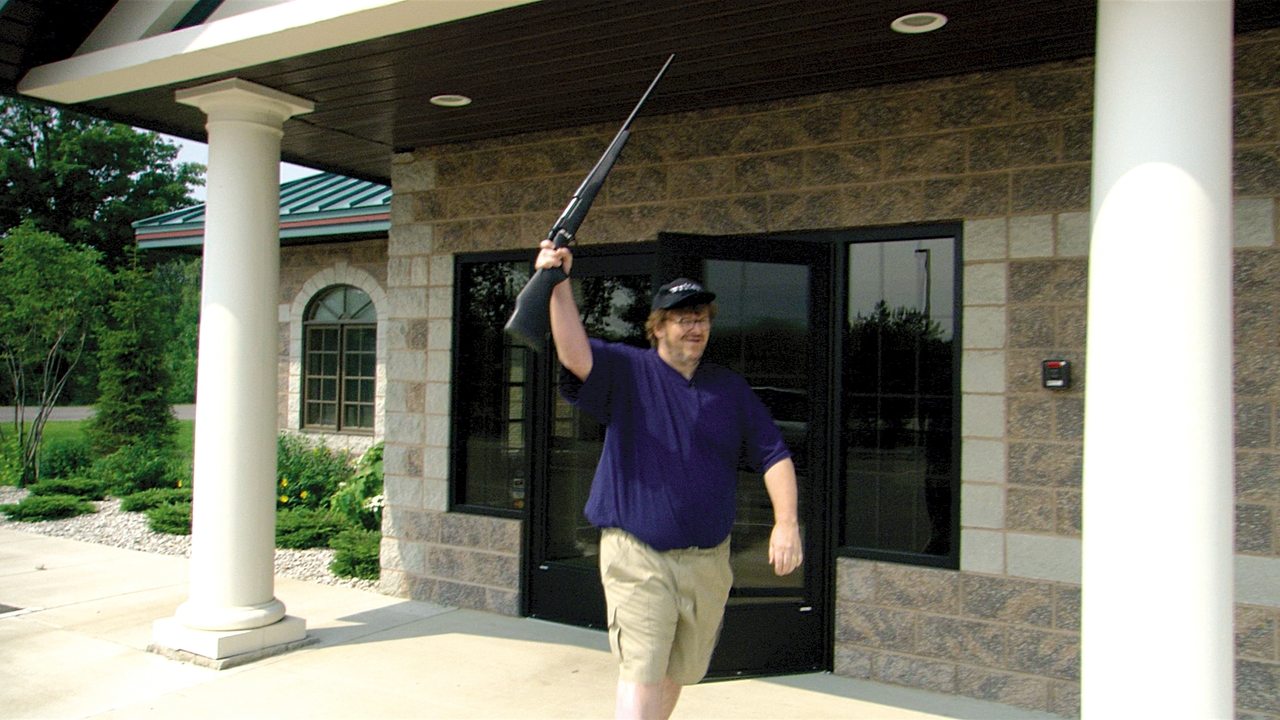
This is not a film about gun control. It is a film about the fearful heart and soul of the United States, and the 280 million Americans lucky enough to have the right to a constitutionally protected Uzi. From a look at the Columbine High School security camera tapes to the home of Oscar-winning NRA President Charlton Heston, from a young man who makes homemade napalm with The Anarchist's Cookbook to the murder of a six-year-old girl by another six-year-old. Bowling for Columbine is a journey through the US, through our past, hoping to discover why our pursuit of happiness is so riddled with violence.
Ranked by shared directors, cast, themes, genre, and era — not just generic recommendations.
Fahrenheit 9/11
Michael Moore's follow-up doc using the same satirical first-person style to indict American political culture.
Sicko
Moore's investigative doc tackling another systemic American failure with the same provocative, cross-country comparison approach.
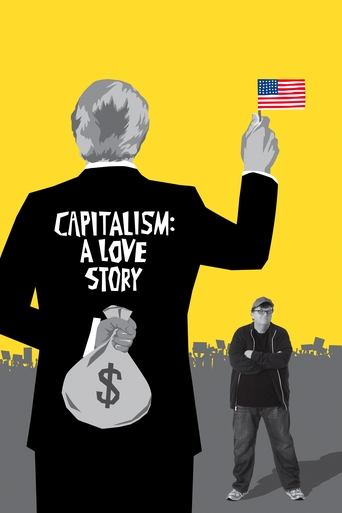
Capitalism: A Love Story
Moore turns his lens on corporate America with the same blend of polemic, humor, and stunt journalism.
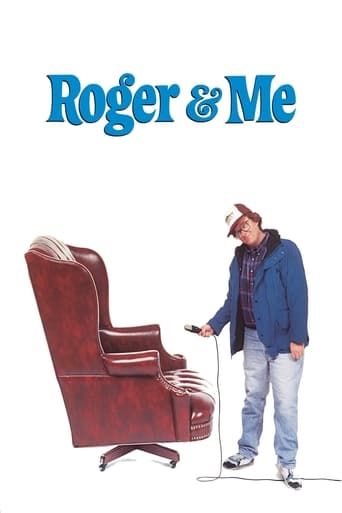
Roger & Me
The film that defined Moore's confrontational doc style and Flint-rooted critique of American capitalism.
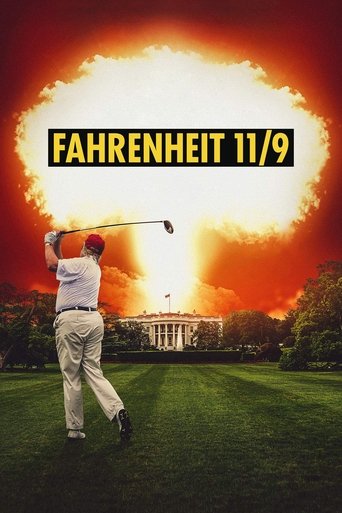
Fahrenheit 11/9
Moore doc directly revisiting school shootings (Parkland) and gun politics in Trump-era America.
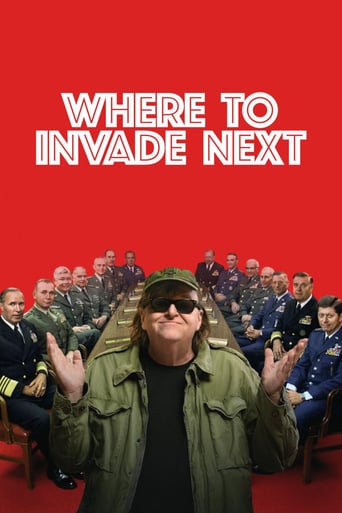
Where to Invade Next
Moore comparing US dysfunction to other countries — same comparative satirical structure as the Canada sequences in Bowling.
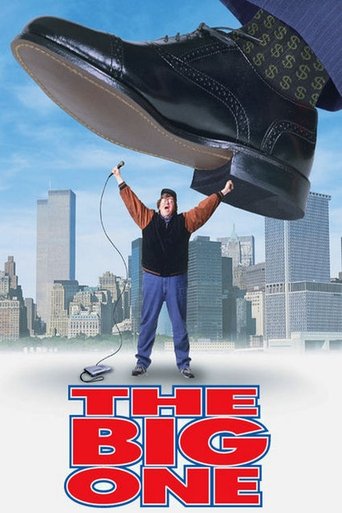
The Big One
Moore's road-trip doc confronting CEOs about American job loss — same gonzo confrontation style.

Elephant
Gus Van Sant's Columbine-inspired narrative drama covers the exact event Moore investigates.
Pets or Meat: The Return to Flint
Moore's short follow-up to Roger & Me, same voice and Flint subject matter.

Michael Moore in TrumpLand
Moore one-man political show — same voice and political satire, lower-budget format.
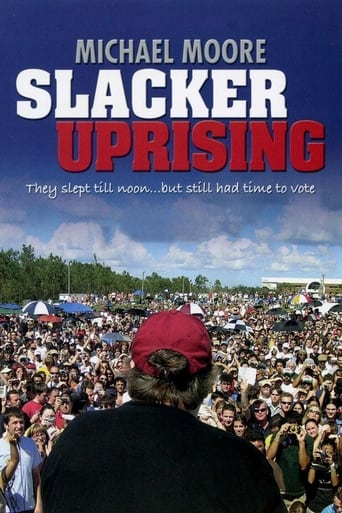
Slacker Uprising
Moore touring colleges to mobilize voters; same persona and political-doc lane.
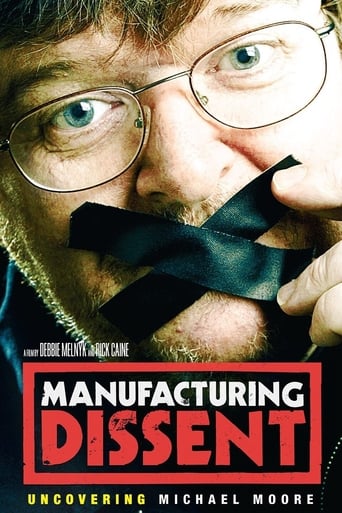
Manufacturing Dissent
Documentary directly about Moore's methods — natural companion piece for viewers of Bowling.
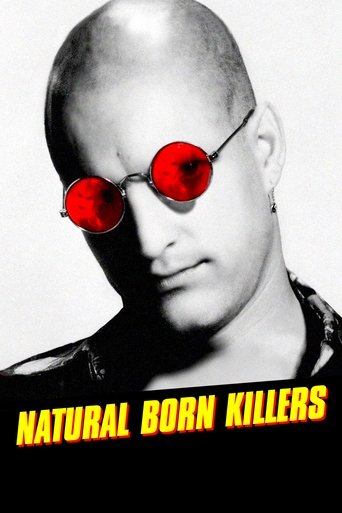
Natural Born Killers
Stone's satire on media glorification of mass violence echoes Bowling's media-fear-spiral thesis.

I'm Not Ashamed
Dramatization of a Columbine victim's life — overlapping subject, very different (faith-based) angle.
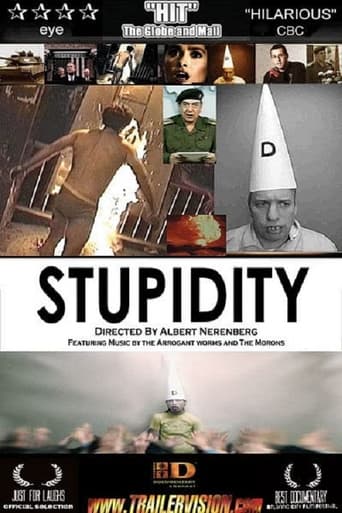
Stupidity
Same-era satirical doc on American culture featuring overlapping interview subjects.
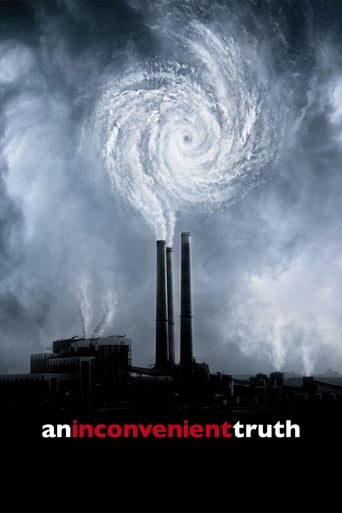
An Inconvenient Truth
Same era Oscar-winning issue-advocacy documentary using a charismatic narrator to galvanize public opinion.
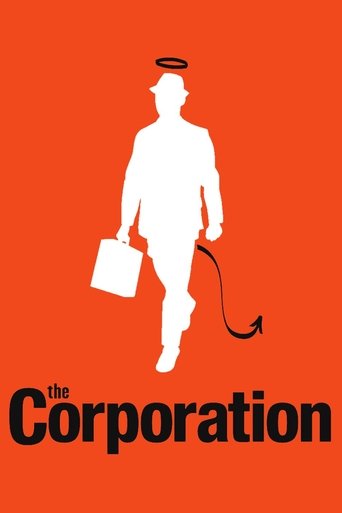
The Corporation
Companion 2000s left-leaning systemic-critique doc that pairs naturally with Bowling for Columbine.
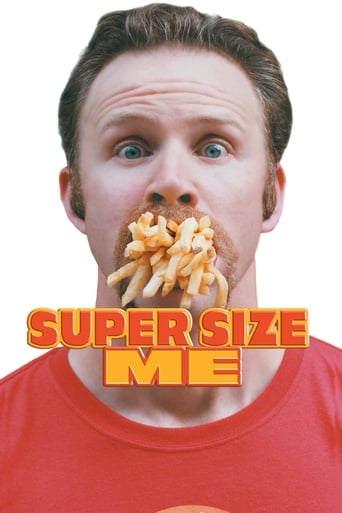
Super Size Me
First-person stunt-journalism doc in Moore's mold targeting another American institution.
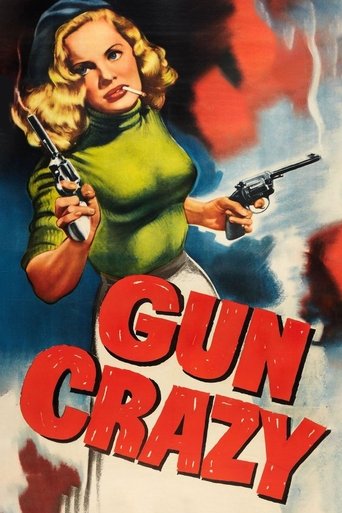
Gun Crazy
Classic noir built around American gun obsession — thematic kinship though fictional and from another era.
How Good Is Bowling for Columbine?
Ratings across IMDb, Rotten Tomatoes, Metacritic, and TMDB, plus our verdict.
Critics rate this 2.0 points higher than audiences — more appreciated by reviewers than general viewers.
Where to Watch Bowling for Columbine
Streaming, rental, and purchase options across 40+ countries.
United States
USFree with Ads
2 The Roku Channel
 Tubi TV
Rent
3 Amazon Video
 Apple TV Store
 Fandango At Home
Buy
5Amazon VideoApple TV StoreFandango At Home Amazon DVD / Blu-ray
 Barnes & Noble
Available in 9 countries
Frequently asked about Bowling for Columbine
Common questions people search for, with answers written by us at MoviesPack.
Is there a documentary about Bowling for Columbine?
Bowling for Columbine is itself a documentary, directed by Michael Moore and released in 2002. It examines gun violence in the United States, with the Columbine High School massacre as a central reference point.
Why is the movie called Bowling for Columbine?
The title refers to the fact that the two Columbine shooters, Eric Harris and Dylan Klebold, attended a school bowling class on the morning of the April 20, 1999 attack. Michael Moore uses the detail to question why bowling was not blamed for the massacre when music, films, and video games were.
Is Bowling for Columbine worth watching?
Bowling for Columbine won the Academy Award for Best Documentary Feature in 2003 and holds a 7.9 rating, making it widely regarded as a landmark documentary. It runs 120 minutes and remains one of the highest-grossing documentaries of its era.
Why is the film called 'Bowling for Columbine' if bowling has nothing to do with the shooting?
The title refers to a detail Moore investigates early in the film: Eric Harris and Dylan Klebold reportedly attended a bowling class at 6 a.m. on the morning of April 20, 1999, before carrying out the Columbine High School massacre. Moore uses this detail to challenge the media's tendency to blame specific cultural triggers — like violent video games or Marilyn Manson's music — by pointing out that no one blamed bowling. The title is deliberately ironic, mocking the search for simple scapegoats.
What happens during Michael Moore's visit to Charlton Heston, and how does it end?
Moore tracks down Charlton Heston, then president of the NRA, and secures an interview at his home. Moore presses Heston on why the NRA held rallies in Littleton, Colorado and Flint, Michigan shortly after mass shootings in those communities. When Moore produces a photo of a six-year-old girl shot dead by a classmate in Flint, Heston abruptly stands up and walks away without responding. Moore is left holding the photo, which he places against a post on Heston's property as a quiet, pointed gesture.
What is the significance of the animated segment 'A Brief History of the United States of America' in the film?
The cartoon, produced in a crude South Park-like style, presents Moore's thesis that American gun violence is rooted not in pop culture or mental illness but in a deeply embedded culture of fear — particularly fear of the 'other,' traced from Puritan settlers fearing Native Americans through slavery, the Cold War, and modern politics. It argues that white America has historically used violence, backed by fear, to maintain social control. The segment functions as a satirical summary of the film's central argument about systemic causes rather than surface-level ones.
Why does Moore focus on Flint, Michigan and Canada in his comparison of gun culture?
Flint, Michigan is Moore's hometown and serves as a symbol of economic devastation — the city was gutted by General Motors plant closures, leading to poverty and crime. Moore uses Flint to ask why economic despair translates into gun violence in America but not in similarly armed countries like Canada. In Canada, Moore finds unlocked doors and low murder rates despite comparable gun ownership, leading him to argue that American gun violence is driven more by a manufactured culture of fear than by gun access alone. The contrast is central to his thesis.
What do the Columbine survivors do when they accompany Moore to Kmart headquarters, and what is the outcome?
Two survivors of the Columbine shooting — who still carried Kmart-purchased bullets lodged in their bodies — join Moore in visiting Kmart's corporate headquarters in Troy, Michigan to ask the company to stop selling handgun ammunition. After initial brush-offs from PR staff, Moore and the survivors return the next day with media in tow. Facing the publicity, Kmart announced it would phase out handgun bullet sales at all its stores, which Moore presents as a rare concrete victory in the film.
Recent Updates
New Trailer: Bowling for Columbine
Bowling for Columbine now streaming on Verleihshop (DE)
Bowling for Columbine now streaming on Videoload (DE)
Bowling for Columbine now streaming on MagentaTV (DE)
Bowling for Columbine now streaming on Videobuster (DE)