
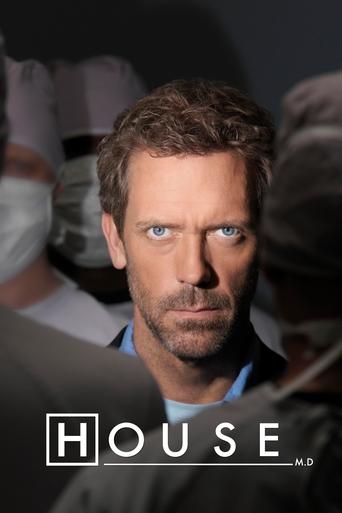
Shows Like House
Dr. Gregory House, a drug-addicted, unconventional, misanthropic medical genius, leads a team of diagnosticians at the fictional Princeton–Plainsboro Teaching Hospital in New Jersey.
Ranked by shared creators, cast, themes, genre, and network — not just generic recommendations.

The Good Doctor
Same creator David Shore; same diagnostic hospital format with a socially-impaired genius doctor solving rare cases.
Brilliant Minds
Eccentric genius neurologist bends hospital rules to diagnose rare conditions — near-identical premise and tone to House.

The Knick
Brilliant but drug-addicted surgeon pushing medical boundaries; same genius-addict-doctor core as House, just period-set.

A Young Doctor's Notebook
Isolated doctor battling morphine addiction while treating impossible cases; shares House's medical + drug-addiction DNA.
ER
Definitive serialized hospital drama with morally complex doctors under pressure; closest genre peer to House in scale and tone.
Scrubs
Hospital drama with an eccentric mentor-genius (Cox/Kelso), serialized character arcs, and medical ethics — tonal sibling to House.

Grey's Anatomy
Flagship serialized hospital drama with complex character flaws and high-stakes diagnostics; same shelf as House for medical fans.

Chance
Hugh Laurie plays another brilliant, morally conflicted medical specialist drawn into dangerous territory — direct star-match companion.

Sherlock
House was explicitly modeled on Holmes; same brilliant-misanthrope-solves-impossible-puzzles structure, just swapped medicine for crime.

Nip/Tuck
Provocative, character-driven drama about brilliant surgeons with serious personal failings; same dark, ethical edge as House.

Patrick Melrose
Deeply observed portrait of high-functioning drug addiction and self-destruction; shares House's addict-genius character study tone.

Dopesick
Medical world and opioid addiction examined seriously and critically — overlapping themes of pharmaceutical ethics and drug dependence.

Dr. Death
Medical malpractice drama exploring how a dangerous doctor operated unchecked — shares House's medical ethics and surgeon-gone-wrong tension.

Olive Kitteridge
Misanthropic protagonist with a sharp wit masking deep wounds; shares House's character study of a difficult but compelling person.
Breaking Bad
Brilliant professional with terminal illness spirals morally; shares House's themes of genius, addiction, and self-destruction.
The Resident
Cynical senior doctor mentors an idealist while exposing hospital corruption — shares House's anti-establishment medical drama DNA.

New Amsterdam
Rule-breaking medical director fights a broken hospital system; adjacent to House's theme of a rogue doctor vs. the institution.

Californication
Self-destructive genius with addiction and relationship wreckage; shares House's tortured-protagonist tone even without the medical setting.
Chicago Hope
Ensemble hospital drama with ethical dilemmas; shares the medical drama genre but lighter tone and older procedural style than House.

Private Practice
Serialized medical drama with ensemble character arcs; tonal cousin via the Grey's universe but softer and less misanthropic.
How Good Is House?
Ratings across IMDb and TMDB, plus our verdict.
Where to Watch House
Streaming, rental, and purchase options across 40+ countries.
United States
USStream
4 Hulu
Hulu Amazon Prime Video
 Amazon Prime Video with Ads
 Philo
PhiloBuy
5 Amazon Video
 Apple TV Store
 Fandango At Home
 GRUV
GRUV Amazon DVD / Blu-ray
Available in 137 countries
Frequently asked about House
Common questions people search for, with answers written by us at MoviesPack.
Why does House take Vicodin, and is he actually in chronic pain?
House developed an infarction in his right leg that led to muscle death, causing permanent chronic pain — the Vicodin addiction began as legitimate pain management. The show explores whether the addiction now exceeds genuine medical need, with House himself unable to distinguish the two. His dependency also serves as a psychological crutch that distances him from emotional vulnerability.
What actually happened between House and Stacy Warner before the series began?
Stacy was House's long-term girlfriend when he suffered his leg infarction. Against his explicit wishes, she consented to a more aggressive surgical procedure that saved his life but left him permanently disabled. House resented her for years because the compromise she authorized — removing the dead muscle rather than letting him risk death — was a choice she made for him without his consent, which he experienced as a profound betrayal of autonomy.
Did House genuinely love Cuddy, or was their relationship just another form of manipulation?
The series presents House's feelings for Cuddy as the most authentic romantic attachment of his life — his behavior in Season 7 shows him attempting real emotional openness in ways he never managed with other people. When the relationship collapsed, his relapse and the hallucinated Amber storyline in the Season 7 finale suggest the loss destabilized him more deeply than almost anything else. Whether his love was genuine or entangled with control issues is left deliberately ambiguous by the writing.
What does Amber Volakis's recurring appearance as a hallucination represent?
After Amber dies in Season 4, she reappears as a hallucination in House's mind — most prominently during his psychiatric breakdown in Season 5. She functions as House's own darkest impulses externalized: the part of him that is ruthless, self-serving, and free of guilt. The show positions her as the voice of his subconscious that urges him toward self-destruction, and her appearances typically coincide with moments when House is suppressing a truth he doesn't want to confront.
What is the meaning of the series finale, and does House actually change?
In the finale, House fakes his own death to spend the last months of Wilson's life — who is dying of cancer — with his best friend, choosing human connection over his career and reputation for the first time. The ending is deliberately ambiguous about whether this represents genuine growth: House circumvents the consequences of his choices once again rather than facing them, yet the act itself is one of the most selfless things he ever does. The show suggests he is capable of change in isolated moments but incapable of sustaining it within normal social structures.
Recent Updates
New Trailer: House