Movies Like Your Name.
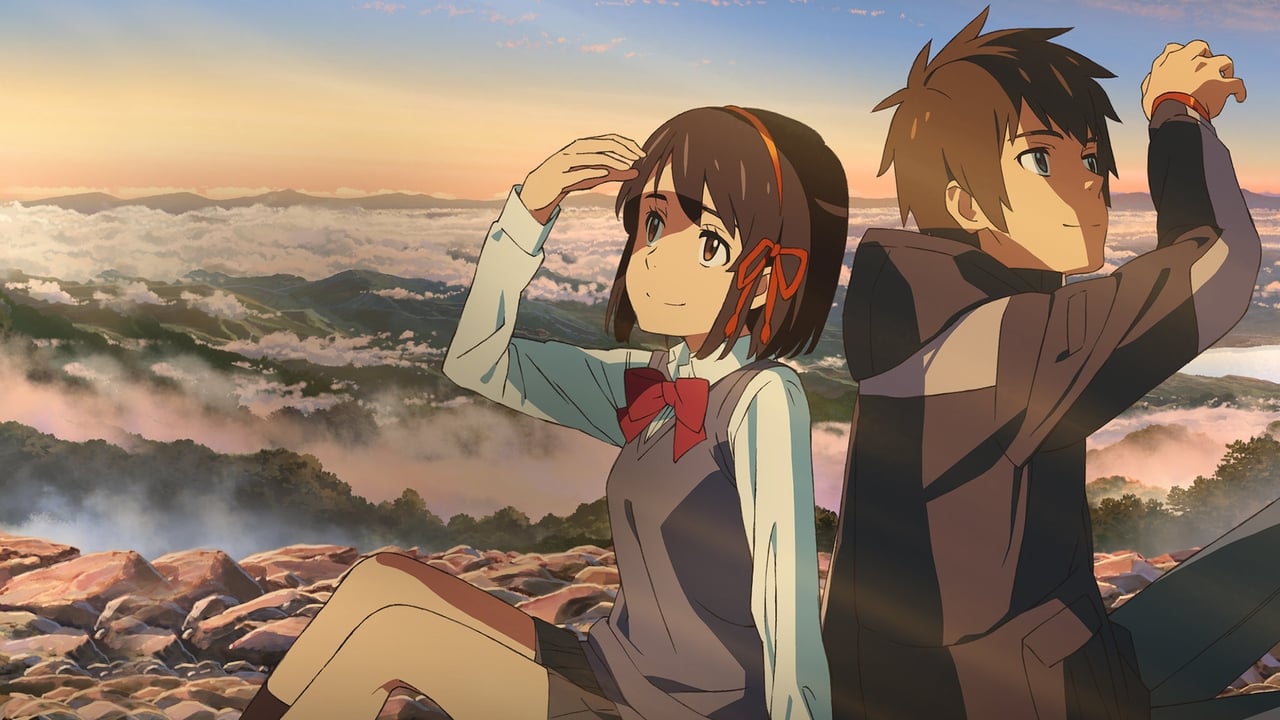
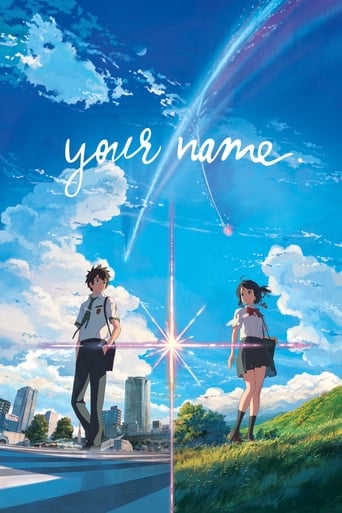
High schoolers Mitsuha and Taki are complete strangers living separate lives. But one night, they suddenly switch places. Mitsuha wakes up in Taki’s body, and he in hers. This bizarre occurrence continues to happen randomly, and the two must adjust their lives around each other.
Ranked by shared directors, cast, themes, genre, and era — not just generic recommendations.
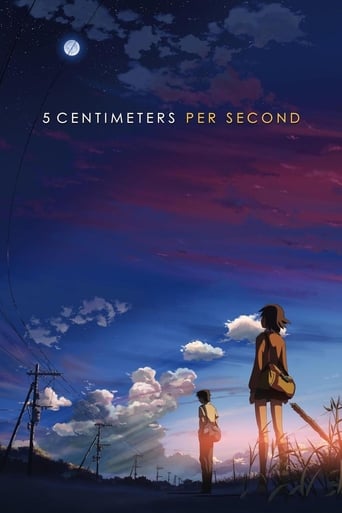
5 Centimeters per Second
Same director Makoto Shinkai; his most emotionally devastating separation romance, identical tone and visual style.
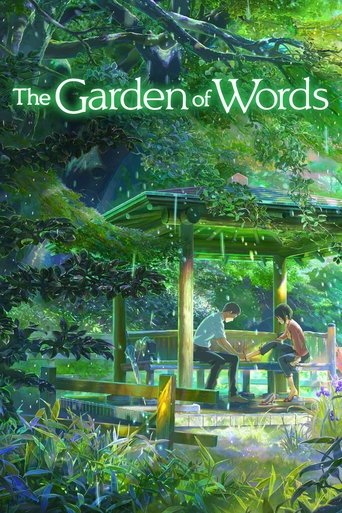
The Garden of Words
Makoto Shinkai; lush rain-soaked romance with aching longing, stunning visuals, signature melancholy.
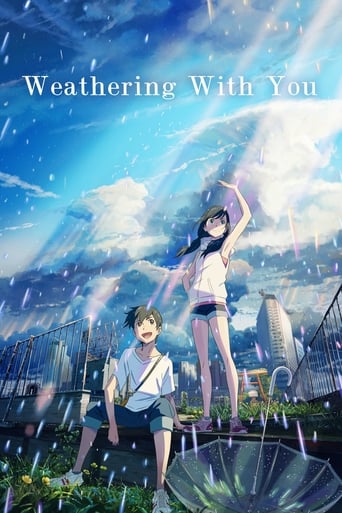
Weathering with You
Makoto Shinkai's direct spiritual successor — supernatural teen romance, natural disaster stakes, star-crossed lovers.

Suzume
Makoto Shinkai; road-trip supernatural romance saving Japan from disaster, same emotional formula and visual language.
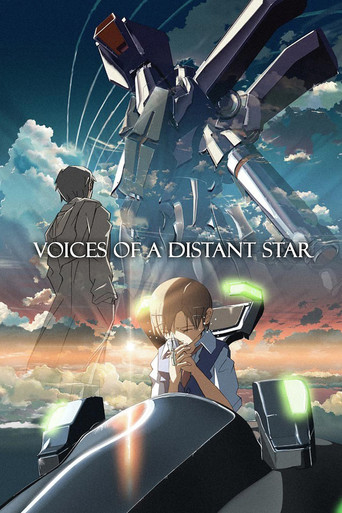
Voices of a Distant Star
Shinkai debut short; star-crossed lovers separated across time and space, same bittersweet longing DNA.
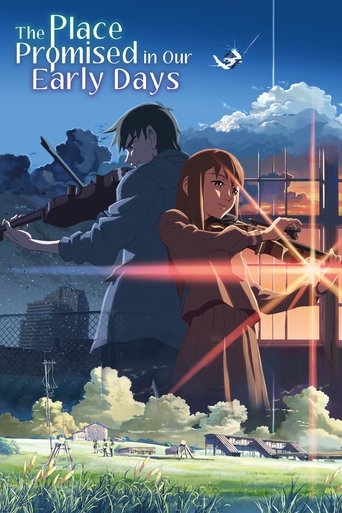
The Place Promised in Our Early Days
Shinkai feature; teenage promise, alternate-timeline supernatural romance, same atmospheric melancholy.
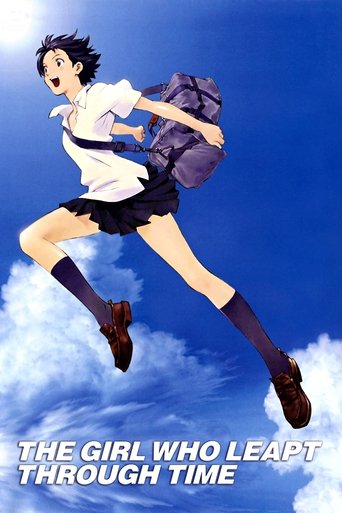
The Girl Who Leapt Through Time
Mamoru Hosoda anime; high school girl with time-manipulation powers, bittersweet romance, same teen audience.
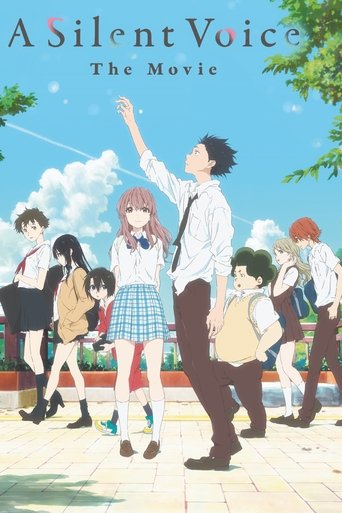
A Silent Voice: The Movie
Kyoto Animation; emotionally intense anime romance/drama, high school setting, redemption arc, same crying-movie audience.
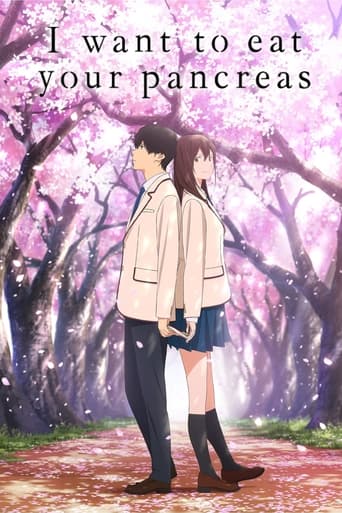
I Want to Eat Your Pancreas
Tragic anime romance between high schoolers, devastating emotional payoff, same demographic and tearjerker tone.
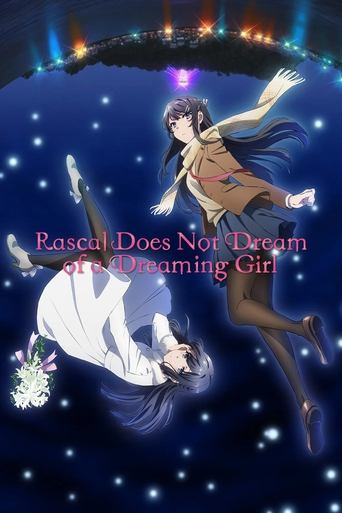
Rascal Does Not Dream of a Dreaming Girl
Supernatural anime romance with time-manipulation tragedy; high school setting, emotional gut-punch ending.
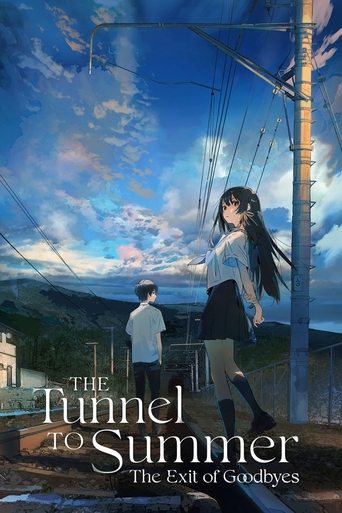
The Tunnel to Summer, the Exit of Goodbyes
Anime; supernatural tunnel warps time, high school romance with tragedy and race-against-time urgency.

AnoHana: The Flower We Saw That Day
Anime film; supernatural grief and unrequited love among high schoolers, beautifully emotional with tears guaranteed.
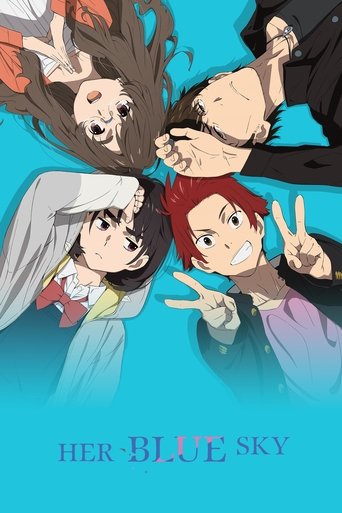
Her Blue Sky
Anime; supernatural time-slip romance in rural Japan, same coming-of-age emotional register and art style.
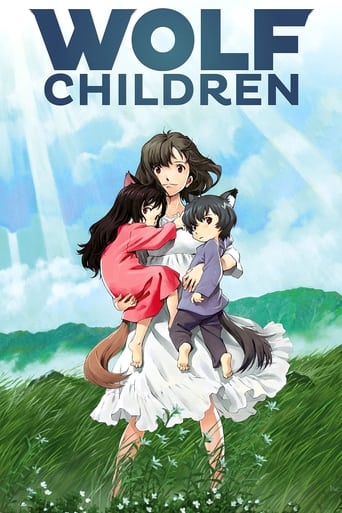
Wolf Children
Mamoru Hosoda; deeply emotional Japanese animated drama about love, sacrifice, and supernatural heritage.
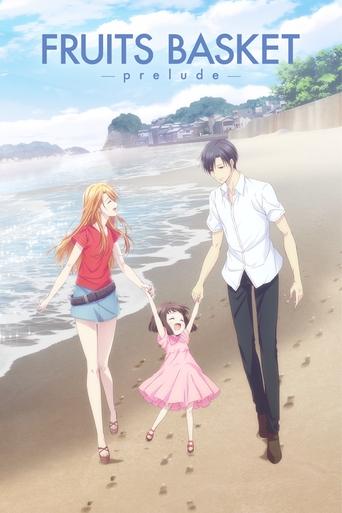
Fruits Basket -prelude-
Anime romance/drama with supernatural family curse; emotional depth and high school setting, shoujo audience overlap.
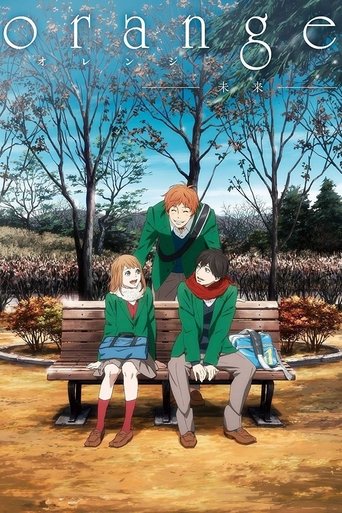
Orange: Future
Anime; letters sent back through time to prevent tragedy, high school romance, same supernatural-saves-loved-one theme.
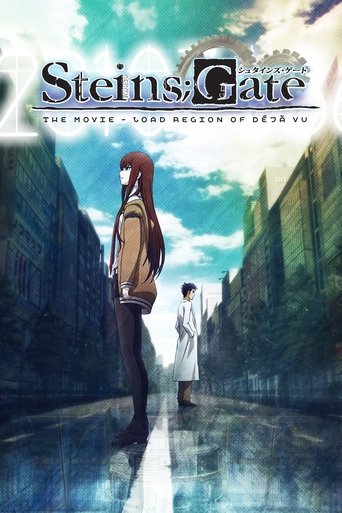
Steins;Gate: The Movie - Load Region of Déjà Vu
Anime; time-travel romance where protagonist fades from reality and partner fights to restore him, emotional sci-fi.
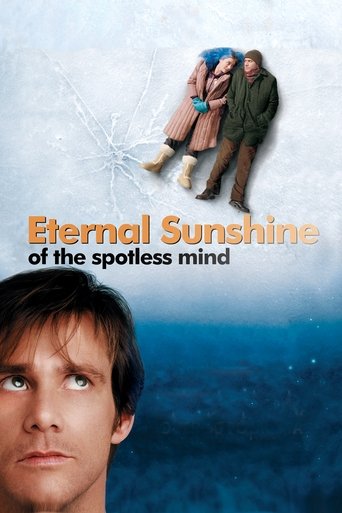
Eternal Sunshine of the Spotless Mind
Live-action; nonlinear memory-erasing romance with same bittersweet inevitability of star-crossed love.
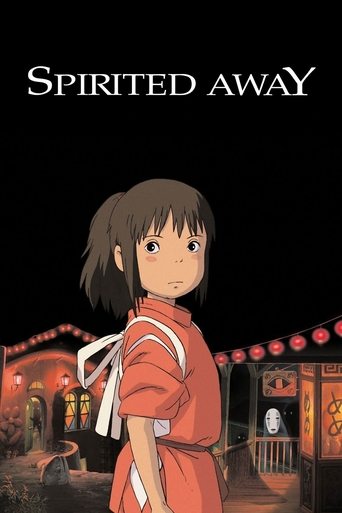
Spirited Away
Hayao Miyazaki Japanese animation classic; supernatural world, emotional journey, same prestige anime audience.
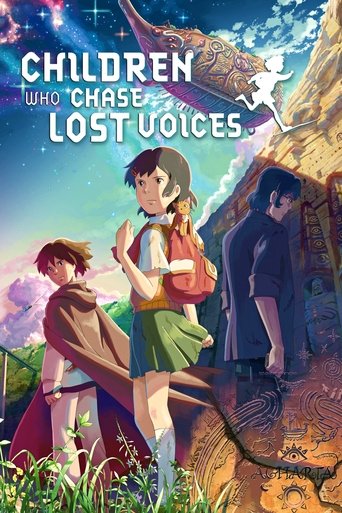
Children Who Chase Lost Voices
Makoto Shinkai; adventure fantasy about grief and loss, slightly different tone but same creator and emotional ambition.
How Good Is Your Name.?
Ratings across IMDb, Rotten Tomatoes, Metacritic, and TMDB, plus our verdict.
Where to Watch Your Name.
Streaming, rental, and purchase options across 40+ countries.
United States
USIn Theaters
1 Fandango
Stream
2 HBO Max Amazon Channel
 HBO Max
Rent
3 Amazon Video
 Apple TV Store
 Fandango At Home
Buy
5Amazon VideoApple TV StoreFandango At Home Amazon DVD / Blu-ray
 Barnes & Noble
Available in 38 countries
Frequently asked about Your Name.
Common questions people search for, with answers written by us at MoviesPack.
Why did Your Name not win an Oscar?
Your Name was not nominated for the Academy Award for Best Animated Feature for the 2017 ceremony, so it could not win. It was eligible but failed to make the shortlist, a snub widely attributed to the Academy's historical bias against non-Disney/Pixar and non-Studio Ghibli anime productions.
What anime movie took 7 years to make?
The Red Turtle and The Tale of the Princess Kaguya are often cited as animated films with roughly eight-year productions, while Makoto Shinkai's earlier work and Studio Ghibli projects like Ponyo had multi-year cycles. No widely documented anime film is specifically known as taking exactly seven years to make.
Is Suzume a sequel to Your Name?
No, Suzume is not a sequel to Your Name. It is a separate standalone film directed by Makoto Shinkai, released in 2022, and shares only thematic elements like disaster, fate, and young protagonists rather than a connected story or characters.
Why do Taki and Mitsuha keep forgetting each other after they stop body-swapping?
The body-swapping is connected to the comet Tiamat and to the mystical time-crossing nature of Mitsuha's town, Itomori. Once the comet strikes and Mitsuha's timeline diverges from Taki's memory, the supernatural thread between them unravels, and the memories fade — a rule Mitsuha's grandmother calls 'musubi' (the binding force). The forgetting is framed as a natural consequence of crossing the boundary between life and death: Mitsuha died in the comet strike three years before Taki's present, and normal memory cannot hold onto someone from across that threshold.
How is it possible that Taki and Mitsuha are body-swapping across a three-year time gap?
The film never gives a strictly logical explanation, treating the phenomenon as a spiritual one rooted in Mitsuha's Shinto heritage and the approaching comet. Mitsuha's family shrine teaches that time is not a straight line but a braid ('musubi'), and the comet's periodic return ties the two timelines together. Taki is in 2016 while Mitsuha is in 2013, and it is only when Taki finds the disaster-relief records near the film's midpoint that he — and the audience — realises the three-year gap.
What happens during the 'twilight hour' (kataware-doki) scene on the mountaintop?
When Taki drinks the kuchikamizake (sake Mitsuha made from her own saliva) at the shrine's crater, he temporarily inhabits Mitsuha's body in her own timeline — the only moment they are simultaneously present in the same time and place. The 'twilight hour' is a liminal period when the boundary between worlds thins, allowing them to see each other face-to-face as themselves for the first time. The moment ends abruptly at sunset, and both lose their memories of each other's names, which is why Taki scrawls 'I like you' on Mitsuha's hand instead of writing his name.
Did Mitsuha actually die when the comet hit Itomori?
In the original timeline, yes — Mitsuha and most of Itomori's residents were killed when a fragment of the comet Tiamat struck the town. Taki's intervention changes this: using the memories from the body-swap, he guides Mitsuha to evacuate the townspeople before the impact, saving over four hundred lives including Mitsuha's own. The film confirms she survives in the altered timeline, though both protagonists lose all memory of each other as a result of rewriting that past.
Why don't Taki and Mitsuha recognise each other when they pass on the Tokyo train early in the film?
That brief encounter on the train occurs before either of them has become consciously aware of the body-swapping, so neither has a name or clear face to attach to their fragmentary dreams. By that point Mitsuha has already been writing in Taki's phone and leaving notes, but the memory of the other person remains dream-like and just out of reach. The scene is also chronologically out of order from Taki's perspective — it is Mitsuha travelling to Tokyo to find the boy from her dreams, placing it in 2013 while Taki's storyline is 2016.
Recent Updates
Your Name. release date changed to 2016-07-01
New Trailer: Your Name.
Your Name. now streaming on ARTE Boutique (FR)
Your Name. now streaming on Pathé Home (FR)
Your Name. now streaming on Premiere Max (FR)